Legal Documents For Selling Land in Utah: Tips for Landowners
Legal Documents for Selling Land in Utah: Complete Checklist
Selling land in Utah requires specific legal documents to transfer ownership properly and protect both the buyer and seller. Whether you are selling vacant land, agricultural acreage, or a residential lot, understanding the paperwork helps you prepare for closing and avoid costly delays. Utah does not require a real estate attorney to close a land sale, but having the right documents you need in order is essential. This guide covers every legal document required when selling land in Utah, from the purchase agreement to the recorded deed. Every buyer expects a smooth transaction, and proper documentation ensures the sale closes without legal issues.
Essential Documents Needed to Sell Land in Utah
The legal documents required for a land sale in Utah fall into three categories: pre-closing documents, closing documents, and post-closing records. Here is a complete checklist of the important documents involved in a typical vacant land transaction. Having these ready before a buyer makes an offer saves time and prevents delays.
Purchase agreement. The Real Estate Purchase Contract (REPC) is the foundation of any land sale. This legally binding agreement includes the purchase price, earnest money amount and terms of the sale, closing date, contingencies, property legal description, and signatures of all parties. In Utah, standard purchase agreement forms are available through the Utah Association of Realtors or legal document services. Both buyer and seller should review every clause of the agreement carefully before signing. The sale agreement establishes the terms that govern the entire transaction, and any buyer who is serious about closing will want a thorough, well-drafted sale contract.
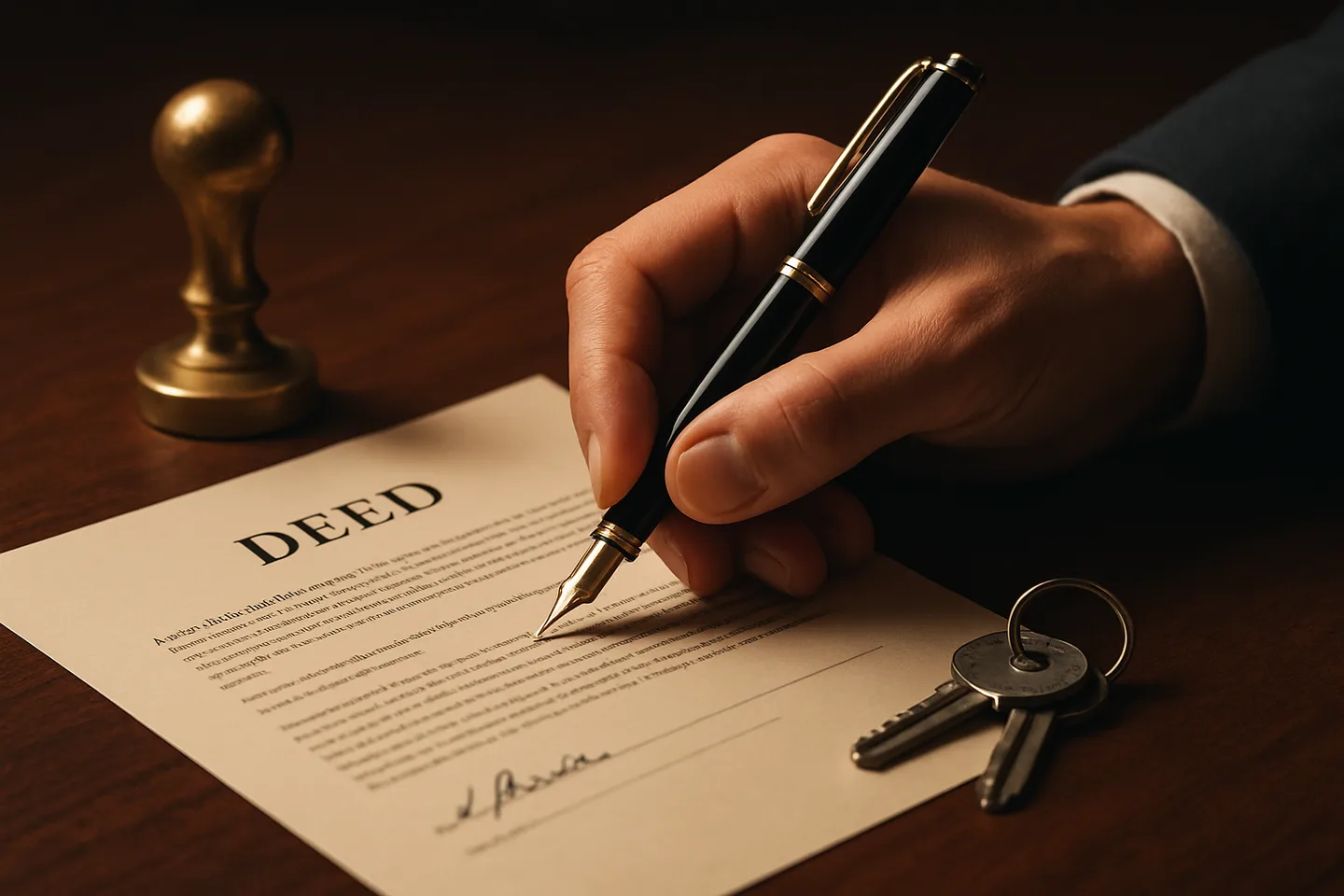
Property deed. The deed is the legal document that transfers ownership from seller to buyer. Utah uses two primary types: warranty deeds and quitclaim deeds. A warranty deed guarantees that the seller holds clear title and has the legal right to sell the property. A quitclaim deed transfers only whatever interest the seller has without guarantees. Most arm's-length land sales use warranty deeds because they provide the buyer with the strongest title protection. The deed must include the legal description, the names of both buyer and seller, and the consideration paid. Every deed in Utah must be notarized before recording.
Title search and preliminary title report. Before closing, the title company conducts a title search by examining county records going back 40 to 60 years. The preliminary title report lists the current owner, legal description, outstanding liens, easements, and any exceptions to title insurance coverage. This important document reveals problems that must be resolved before the sale can close. A clean title gives the buyer confidence that no one else has a claim to the property. If the title search reveals legal issues, the seller must resolve them before the buyer will proceed.
Title insurance policy. Title insurance protects the buyer against undiscovered title defects, liens, or ownership disputes that the title search may have missed. While not legally required in Utah, most buyers and lenders require title insurance as a condition of the agreement. The title company issues the policy at closing. Any buyer purchasing land without title insurance takes on significant risk.
Seller disclosure. Utah's Seller Disclosure Act requires disclosure of known material defects for residential dwellings. Vacant land sales are generally exempt from most dwelling-specific requirements, but sellers should still disclose any known environmental issues, flooding history, or access limitations. Honest disclosure protects the seller from future legal claims by the buyer.
Earnest money agreement. Earnest money in Utah land transactions typically ranges from 1% to 3% of the purchase price. The funds are held in escrow by the title company and applied to the purchase price at closing. If the buyer defaults on the agreement, the earnest money may be forfeited to the seller under the terms of the sale agreement. This agreement protects the seller by ensuring the buyer has financial commitment to the transaction.
Documents Needed at Closing in Utah

At closing, several additional documents come into play. The title company prepares most of these, but both the buyer and seller should understand what each one covers.
Closing disclosure (settlement statement). This document itemizes all costs for both buyer and seller, including the sale price, prorated property tax, title company fees, recording fees, and any outstanding liens to be paid from proceeds. The closing disclosure replaced the HUD-1 form and must be reviewed by both the buyer and seller before signing. Any discrepancies in the agreement terms should be resolved before closing.
Payoff statement. If the seller has an existing mortgage or lien on the land, a payoff statement from the lender is required. The title company uses this to pay off the obligation from the sale proceeds before distributing the remaining balance to the seller. Outstanding property tax balances are also settled at closing. Every buyer expects clean title at transfer.
Notarized deed. The warranty deed or quitclaim deed must be signed by the seller and notarized before it can be recorded. A notary public verifies the seller's identity and witnesses the signature. The notarized deed is then submitted to the county recorder for recording. Without proper notarization, the deed cannot be legally recorded and the buyer does not receive clear title.
Recording documents. All deeds in Utah must be recorded with the county recorder to be legally effective against third parties. Recording fees are $10 for the first page and $2 per additional page. The title company handles the recording process and provides confirmation to both buyer and seller once the deed is on public record. Recording establishes the buyer as the new legal owner.
Tax forms. Depending on the sale amount, the closing may require IRS Form 1099-S. The title company typically prepares and files this form. Sellers should keep a copy for their tax records, as capital gains from the land sale must be reported on federal and state tax returns.
Utah-Specific Legal Considerations for Land Sales

No attorney requirement. Unlike some states, Utah does not require an attorney at closing or to prepare the deed. Title companies handle the majority of land sale closings. However, sellers involved in complex transactions with multiple owners, property line disputes, or unclear title may benefit from consulting a real estate attorney to avoid legal issues down the road.
Water rights documentation. In Utah, water rights are separate from land ownership. If the property includes water rights, the seller must provide documentation and may need to file a change application with the Utah Division of Water Rights. Any buyer of agricultural land should ask about water rights as part of their due diligence before finalizing the agreement.
Survey and legal description. A current survey is not legally required, but it is strongly recommended. The legal description on the deed must accurately identify the property and its property line boundaries. If the existing description is based on an old survey, a new survey ($300 to $800) prevents boundary disputes after closing. Every buyer benefits from knowing the exact property line location before they purchase the property.
HOA and deed restrictions. If the land is in a subdivision with a homeowners association or deed restrictions, the seller must provide copies of the CC&Rs to the buyer. These documents affect what the buyer can do with the property and are a material part of the sale agreement.
Frequently Asked Questions About Legal Documents for Selling Land
What documents do I need to sell land in Utah?
The essential documents you need include a purchase agreement (sale contract), property deed (warranty deed or quitclaim deed), title search report, title insurance policy, seller disclosure, earnest money agreement, closing disclosure, and tax forms. A title company prepares most closing documents. Having the legal description, property tax records, and survey ready before a buyer makes an offer speeds up the process significantly.
Do I need a lawyer to sell land in Utah?
No. Utah does not require an attorney for a land sale. A title company handles the title search, deed preparation, escrow, and recording. However, consulting a real estate attorney is advisable for complex situations involving multiple owners, title disputes, or unusual agreement terms. An attorney review typically costs $200 to $500 and helps both buyer and seller avoid legal issues.
What type of deed should I use?
A warranty deed is standard for most land sales in Utah. It guarantees the buyer clear title and provides the strongest protection. A quitclaim deed is sometimes used between family members or when the buyer accepts title risk. Your title company can advise on the appropriate deed type based on the transaction and the agreement between buyer and seller.
What are closing costs for selling land in Utah?
Seller closing costs include the title company fee ($500 to $1,500), recording fees ($10 to $20), prorated property tax, and any existing lien payoffs. Utah does not charge a real estate transfer tax. If you need to sell your land without an agent, there are no commissions. Total seller costs typically range from $500 to $2,000 for a straightforward land sale. Every buyer may negotiate which party pays certain costs as part of the sale agreement.
Simplify the Process: Sell Your Utah Land for Cash
Gathering the right legal documents and navigating the closing process can feel overwhelming, especially if you have never sold land before. If you need to sell the property and want to skip the complexity, selling to a direct cash buyer simplifies everything. We handle all paperwork, coordinate with the title company, and close in as little as two weeks. Every buyer we work with receives clear documentation and a smooth closing. Whether you own vacant land in Cache County, Salt Lake County, or anywhere in Utah, we purchase the property directly for cash with no commissions and no fees. Contact us for a no-obligation offer.
Need to sell your Utah land? We buy land directly from owners for cash, with no fees, no commissions, and we close in as little as 2 weeks.
Loading form...
Sell Your Utah Land for Cash
Ready to sell? We buy land directly from owners across Utah. Get a fast, no-obligation cash offer.